

How to Choose the Perfect Bra for Your Body Type

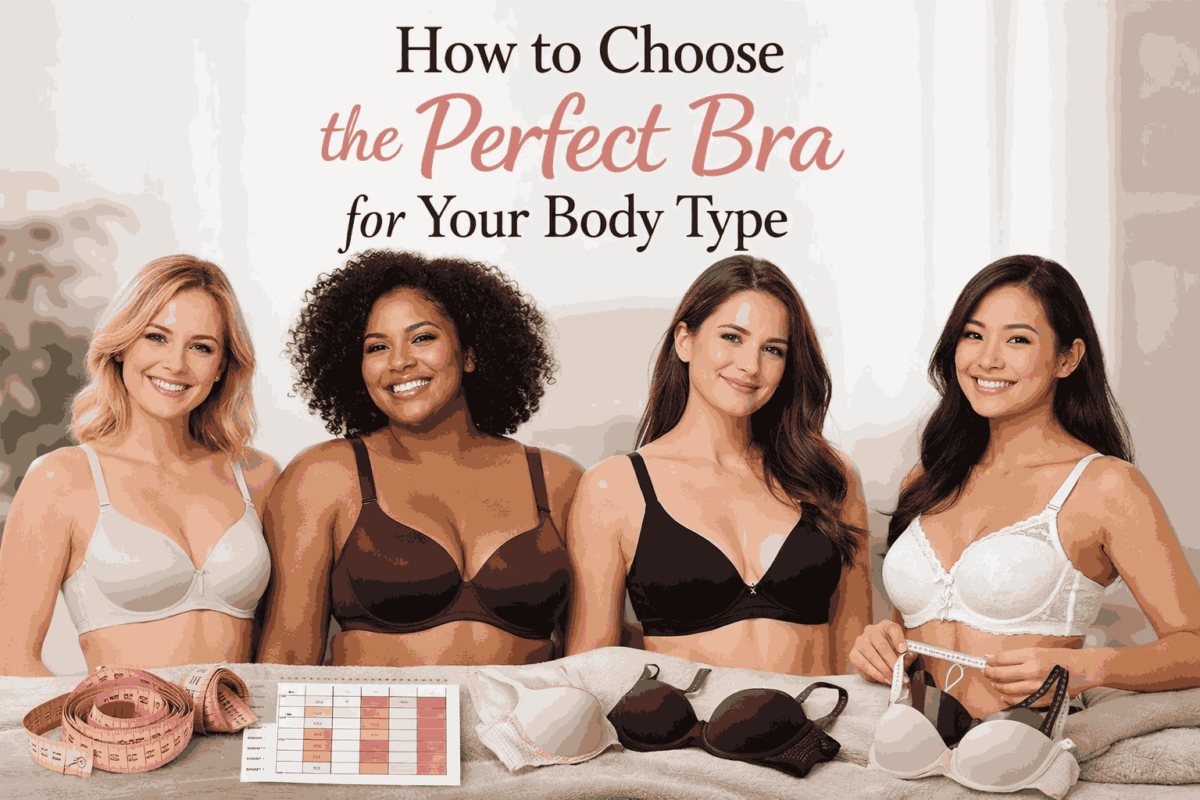
Introduction
Let’s be blunt: most women are walking around in the wrong bra. Not slightly wrong—fundamentally wrong. Too loose, too tight, wrong cup, wrong shape, wrong purpose. And then everyone wonders why they’re uncomfortable, slouching, or constantly adjusting straps like it’s a nervous habit.
Learning how to choose a bra isn’t about trends, lace, or what looks good on a hanger. It’s about fit, structure, and understanding your actual body—not the size you wish you were or the size you’ve been buying for years out of habit.
This guide cuts through the nonsense. You’ll learn how sizing really works, why body type matters more than cup letters, and how a proper fit changes everything from comfort to posture. Consider this a practical, no-fluff bra fitting guide women can actually use—without sales pressure or magical promises.
If your bras feel “good enough,” chances are they’re not. And once you understand why, you won’t unsee it.
Why Wearing the Right Bra Matters More Than You Think
A bra isn’t decoration. It’s structural support. When it fails, your body pays for it.
A properly fitted bra improves posture, reduces shoulder and neck strain, distributes weight evenly, and creates a cleaner silhouette under clothing. A bad one does the opposite—digging wires, slipping straps, back pain, constant readjusting. That’s not normal. That’s bad engineering.
Support isn’t optional, especially for daily wear. Comfort isn’t a luxury; it’s a baseline requirement. If your bra feels tolerable instead of comfortable, you’re settling.
And long term? Poor support can stretch breast tissue permanently. Gravity always wins—but you don’t need to help it.
Correct Bra Size Guide – How to Measure Yourself Properly
Guessing your size is the fastest way to get it wrong. This correct bra size guide exists because most sizing errors start with bad measurements.
How to Measure Band Size
Wrap a measuring tape snugly around your ribcage, directly under your bust. No padding. No breathing tricks.
- Snug means firm, not tight.
- Round to the nearest whole number.
- This number is your band size.
If the band rides up your back, it’s too big. If it restricts breathing, it’s too small. The band does most of the work—get this wrong and nothing else matters.
How to Measure Bust Size
Measure around the fullest part of your bust while standing naturally.
Common mistakes:
- Measuring over bulky clothing
- Pulling the tape too tight
- Leaning forward to “add” volume
Don’t cheat the tape. It always wins.
Understanding Cup Size (Why It’s Relative)
Cup size isn’t absolute. A D cup on a 32 band is not the same as a D cup on a 38 band. Cup volume changes with band size.
This is why fixating on letters is pointless. Fit matters more than ego.
If you’re shopping for well-fitted bras for everyday wear, focus on how the bra feels and supports—not what the tag says.
Explore properly structured options here:
Bra Fitting Guide for Women – Signs Your Bra Doesn’t Fit
If any of these sound familiar, your bra is wrong:
- Band rides up your back
- Breasts spill over or under the cups
- Cups gape or wrinkle
- Shoulder straps dig in or fall off
- Underwire stabs or floats away from the chest
None of this is “normal.” It’s poor fit. A good bra disappears once it’s on. You shouldn’t be thinking about it all day.
How to Choose a Bra Based on Your Body Type
This is where most guides fail. Body shape matters. A lot.
Small Bust or Shallow Chest
You don’t need aggressive padding. You need shape and proportion.
Best options:
- Lightly padded bras
- Soft contour cups
- Subtle push-up designs (used strategically)
Avoid oversized cups—they collapse instead of lifting. Structured designs like structured push-up bra styles provide shape without excess bulk.
Browse options here:
Full Bust or Heavy Bust
Support is non-negotiable.
Look for:
- Full-coverage cups
- Wide, reinforced straps
- Strong, firm bands
Thin straps and flimsy lace are aesthetic traps. They look nice, then fail by noon.
Wide-Set Breasts
Your issue isn’t volume—it’s spacing.
Best choices:
- Plunge bras
- Side-support bras
- Narrow center gore designs
These pull tissue inward and prevent the “east-west” look.
Petite Body Type
Standard bras are scaled wrong for you.
Choose:
- Narrow straps
- Shorter underwires
- Cups designed for smaller frames
Oversized hardware causes discomfort fast.
Choosing the Right Bra for Different Outfits
One bra for everything is lazy—and ineffective.
Everyday Wear
Prioritize comfort and durability. Neutral colors, breathable fabrics, consistent support.
T-Shirts and Fitted Tops
Seamless bras with smooth cups. Texture shows. Don’t pretend it doesn’t.
Dresses and Special Occasions
Plunge, strapless, or convertible styles—only if they fit properly. Fashion bras that don’t support are costume pieces.
Common Bra Shopping Mistakes Women Still Make
Let’s call them out:
- Buying the same size everywhere
- Choosing padding over fit
- Ignoring fabric quality
- Wearing one bra style for all outfits
Consistency across brands doesn’t exist. Your body isn’t static. Shopping like it is makes no sense.
When to Replace Your Bra
Bras are not permanent.
Replace when:
- Elastic loses tension
- Cups lose shape
- Support disappears
- Your body size changes
If your “favorite” bra is stretched to death, it’s not loyal—it’s useless.
Expert Tips for Long-Term Comfort and Support
- Rotate bras—don’t wear the same one daily
- Hand wash or use a gentle cycle
- Air dry only
- Store cups properly
Quality bras last longer, but only if you treat them like engineered garments—not socks.
Final Thoughts – Finding the Bra That Truly Fits You
Trends fade. Bodies change. Fit remains king.
Once you understand how sizing actually works and how your body type affects support, buying bras stops being frustrating. You stop guessing. You stop settling.
Learning how to choose a bra is about control—over comfort, appearance, and long-term support. Ignore that, and you’ll keep repeating the same mistakes in different colors.
Every 6–12 months or after weight, hormonal, or body changes.
Because sizing isn’t standardized. Always try before committing.
No. Bad fit is bad for you. Proper underwire adds support.
You can—but you’ll destroy it faster. Rotate.
For medical-grade accuracy, see this guide on how to measure bra size correctly from Healthline.
